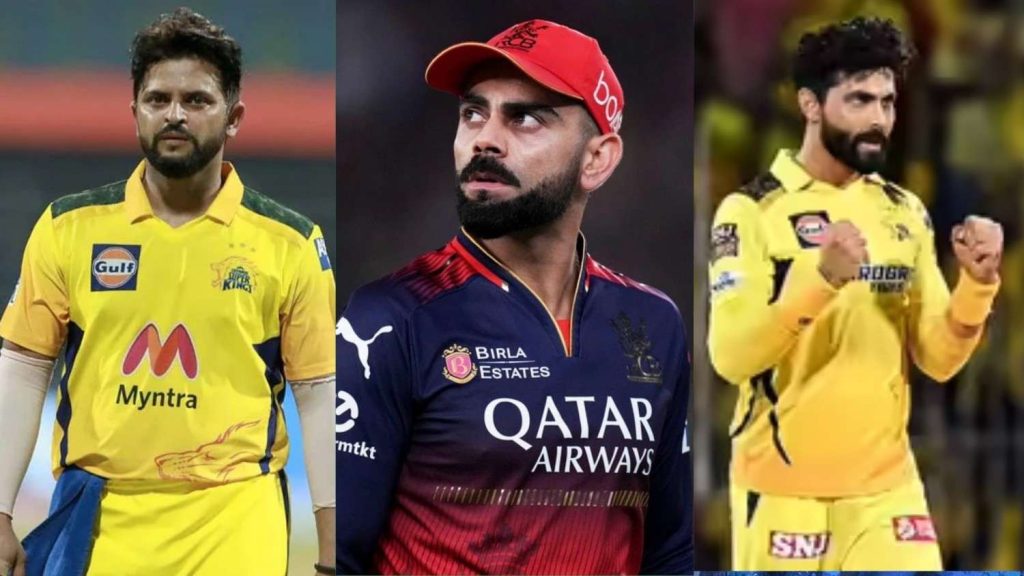
Virat Kohli leads the IPL fielding charts with 126 catches, the most by any non-wicketkeeper fielder in IPL history through 2026.
But the best fielder in IPL history is not decided by catches alone. Athleticism, run-outs, boundary catches, ground fielding, throwing accuracy and consistency all play a role. Here is a data-backed look at the top 10 best fielders in IPL history.
Top 10 Best Fielders in IPL History: Complete Stats (2008–2026)
The table below covers all data from the IPL fielding records list, including catches, career span, and catches per innings ratio.
| Rank | Player | Span | Matches | Innings | Catches | Max/Inn | Ct/Inn |
|---|---|---|---|---|---|---|---|
| 1 | Virat Kohli | 2008–2026 | 283 | 281 | 126 | 3 | 0.448 |
| 2 | Ravindra Jadeja | 2008–2026 | 268 | 267 | 110 | 4 | 0.411 |
| 3 | Suresh Raina | 2008–2021 | 205 | 204 | 109 | 3 | 0.534 |
| 4 | Kieron Pollard | 2010–2022 | 189 | 189 | 103 | 2 | 0.544 |
| 5 | Rohit Sharma | 2008–2026 | 281 | 281 | 102 | 3 | 0.362 |
| 6 | Shikhar Dhawan | 2008–2024 | 222 | 222 | 99 | 3 | 0.445 |
| 7 | AB de Villiers | 2008–2021 | 184 | 130 | 90 | 3 | 0.692 |
| 8 | David Miller | 2012–2026 | 152 | 152 | 87 | 4 | 0.572 |
| 9 | Manish Pandey | 2008–2026 | 180 | 180 | 86 | 3 | 0.477 |
| 10 | David Warner | 2009–2024 | 184 | 183 | 86 | 4 | 0.469 |
Player-By-Player Breakdown: Top 10 Best Fielders In IPL
Here is a detailed breakdown of the top 10 best IPL fielders:
1. Virat Kohli (RCB), 126 Catches
Virat Kohli leads the IPL fielding charts with 126 catches in 281 fielding innings across 283 matches from 2008–2026. His 0.448 catches-per-innings rate reflects his consistency over a long IPL career.
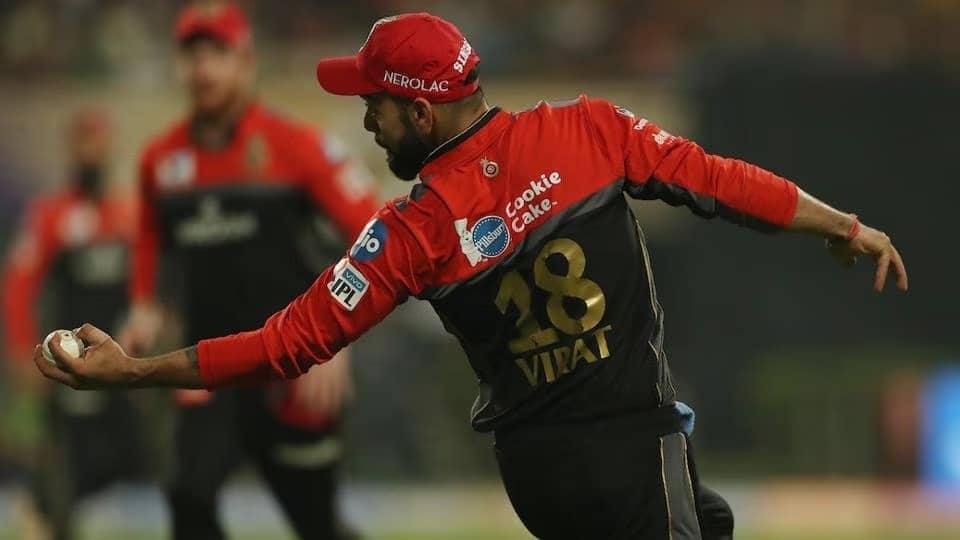
Kohli’s reliability in the inner ring and outfield has made him one of the tournament’s most dependable fielders.
2. Ravindra Jadeja (Csk/Gl/Kochi/Rr), 110 Catches
Nicknamed “Sir Jadeja” by fans for his superhuman fielding, Ravindra Jadeja has 110 catches over 258 innings across multiple franchises, most notably Chennai Super Kings.
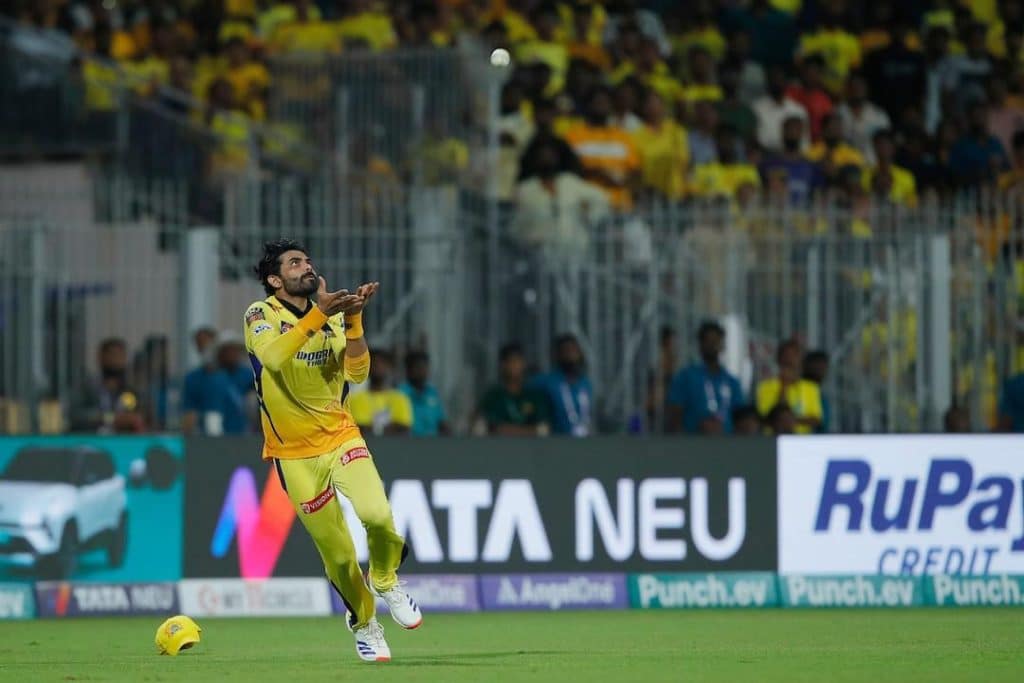
His achievement of taking 4 catches in a single IPL match is one of the rarest fielding feats in the tournament. That alone says everything about his hands.
Jadeja rounds off the trifecta perfectly: he bats, bowls left-arm spin, and fields like a video game character. Teams with him essentially field 12 players.
3. Suresh Raina (Csk/Gl), 109 Catches
Suresh Raina is widely considered one of India’s greatest fielders ever, and his IPL record proves it. He took 109 catches in just 204 innings with a remarkable 0.534 Ct/Inn ratio.
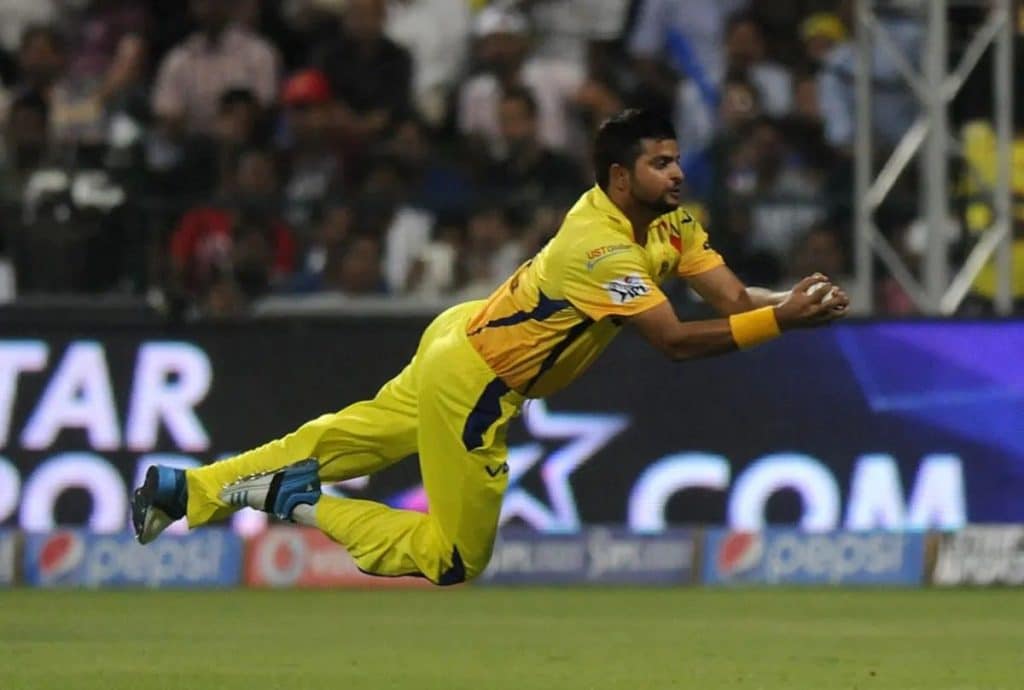
What sets Raina apart is that he covered the most difficult zones: point, cover-point, and mid-wicket, the areas where half-chances turn into dismissals.
His reflex catch at slip against Ajinkya Rahane remains one of the most iconic catches in tournament history.
4. Kieron Pollard (Mi), 103 Catches
Kieron Pollard is the ultimate power package. The Mumbai Indians legend took 103 catches in 189 innings at 0.544 Ct/Inn, all while being a 6-foot-5 unit who could also hit sixes the length of a small country.
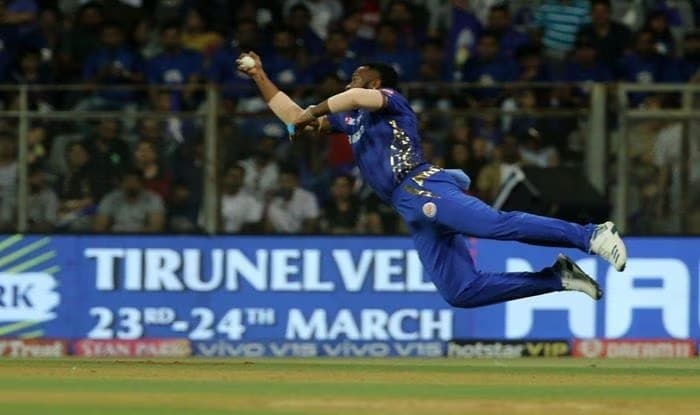
His most memorable fielding moment? A mid-air, one-handed catch at long-on to dismiss Kevon Cooper in 2014, highlighted by Outlook India as a gold standard in IPL fielding.
He also pulled off a famous boundary catch where he caught the ball, realised he was going over, threw it back and stepped back in to complete the catch. Rules were rules. Pollard found a way.
5. Rohit Sharma (Dch/Mi), 102 Catches
Rohit Sharma leads the Ct/Inn race in a different way: consistency over a record-long career. At 276 matches, he has played more IPL games than anyone in the top 10.

His 0.369 Ct/Inn is the lowest on this list, but is partly explained by his long career arc. He has played over 276 innings across 18 seasons.
Rohit also scored 7,183 runs, making him the second-highest run-scorer in the tournament. The man simply does not stop contributing.
6. Shikhar Dhawan (Multiple Teams), 99 Catches
Shikhar Dhawan spread his 99 catches across five franchises: DC, DCH, MI, PBKS, and SRH, over 222 innings. His 0.445 Ct/Inn puts him just above Kohli on that metric.
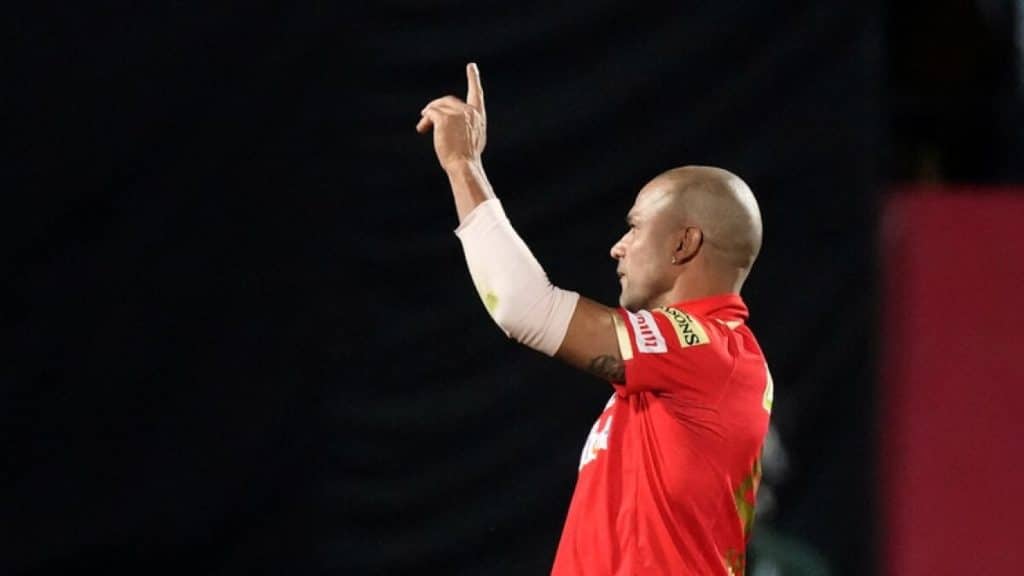
He was a reliable cover fielder throughout his IPL career, and his energy in the field was constant even as his batting form fluctuated season to season.
7. Ab De Villiers (Dc/Rcb), 90 Catches
AB de Villiers is the most efficient fielder in this list, period. His 0.692 Ct/Inn ratio is a full 0.13 above the next best (du Plessis at 0.559). In cricket terms, that is enormous.
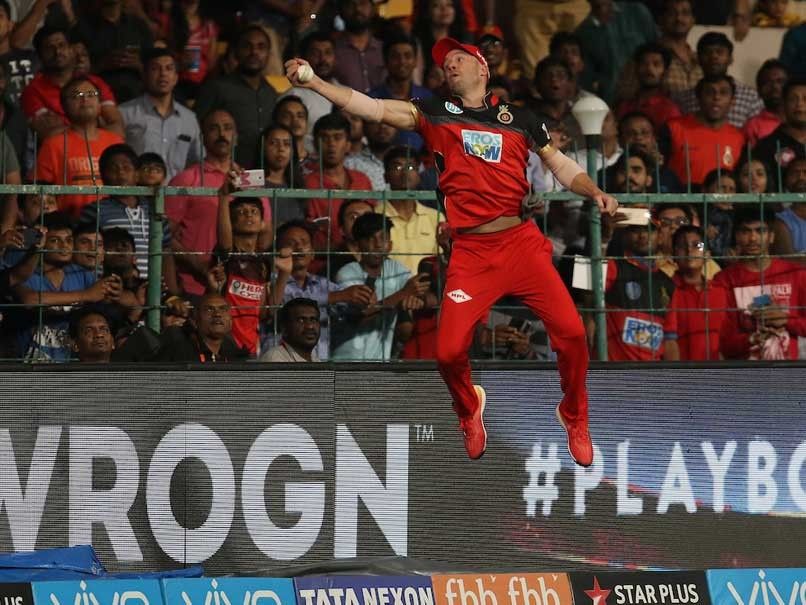
He appeared in only 130 fielding innings across 184 matches, yet still racked up 90 catches. Some of his best catches came during boundary rope moments where he somehow suspended gravity.
His 2018 catch against Sunrisers Hyderabad at mid-wicket, leaping high to snag a ball destined for the stands, was described by Outlook India as redefining what is physically possible in the field.
8. David Miller (DC/GT/KXIP/LSG/RR), 87 Catches
David Miller has taken 87 catches in 152 fielding innings across 152 matches from 2012–2026. His 0.572 Ct/Inn is one of the strongest figures in the top 10.
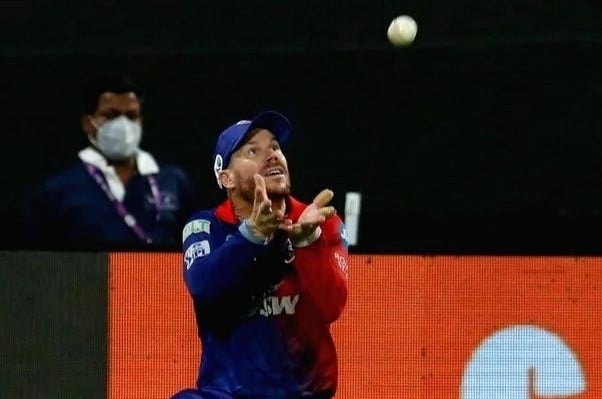
Miller’s strong throwing arm and ability to patrol the boundary make him a valuable outfielder.
9. Manish Pandey (Multiple Teams), 86 Catches
Manish Pandey has collected 86 catches in 180 fielding innings across his IPL career.
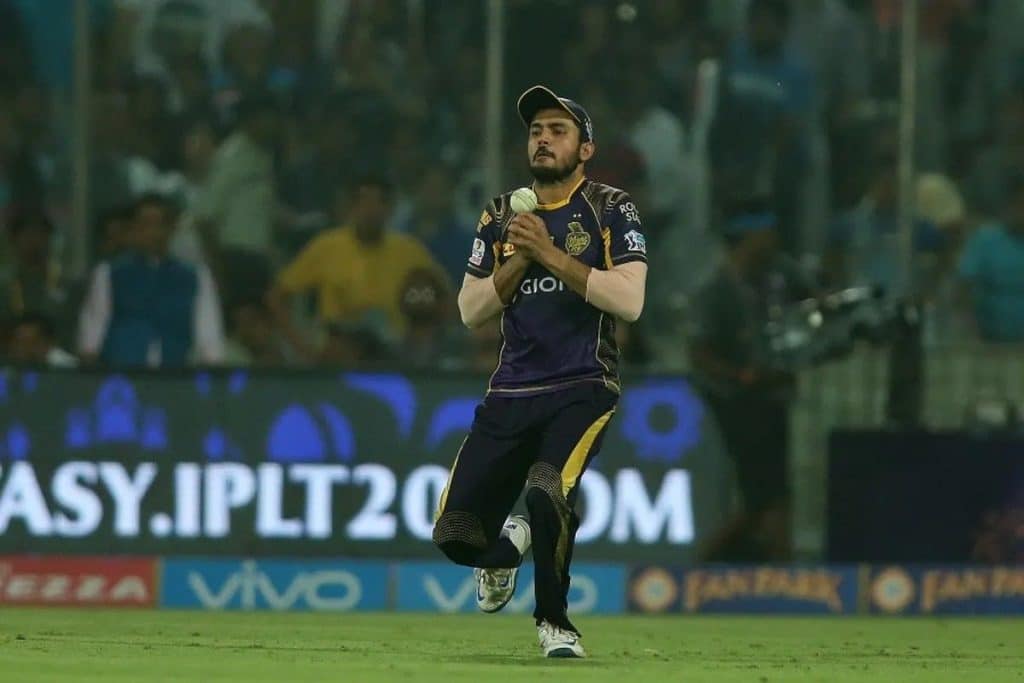
His 0.477 Ct/Inn highlights his consistency, while his experience across several franchises and ability to field in different positions have made him a reliable option in the field.
10. David Warner (DC/SRH), 86 Catches
David Warner finished his IPL career with 86 catches in 183 fielding innings, giving him a 0.469 Ct/Inn rate.
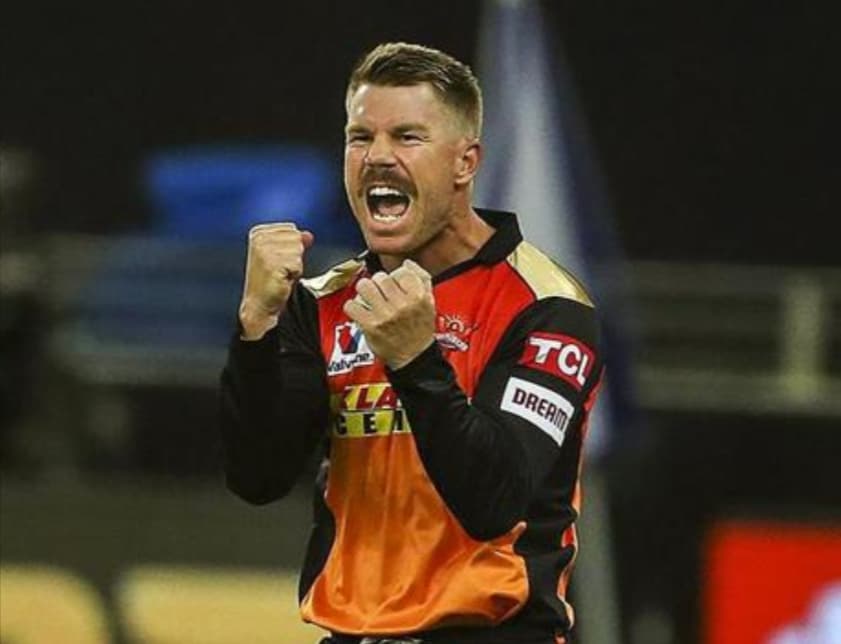
Known for his energy and sharp reactions, Warner was an effective inner-circle and outfield fielder alongside his considerable batting contribution.
Best Fielders By Efficiency: Who Catches The Most Per Innings?
If you rank the top 10 purely by Ct/Inn ratio, the list reshuffles significantly. Here is how it looks:
| Rank | Player | Ct/Inn | Total Catches | Innings |
|---|---|---|---|---|
| 1 | AB de Villiers | 0.692 | 90 | 130 |
| 2 | Faf du Plessis | 0.559 | 85 | 152 |
| 3 | Kieron Pollard | 0.544 | 103 | 189 |
| 4 | Suresh Raina | 0.534 | 109 | 204 |
| 5 | Manish Pandey | 0.477 | 83 | 174 |
| 6 | David Warner | 0.469 | 86 | 183 |
| 7 | Shikhar Dhawan | 0.445 | 99 | 222 |
| 8 | Virat Kohli | 0.444 | 120 | 270 |
| 9 | Ravindra Jadeja | 0.426 | 110 | 258 |
| 10 | Rohit Sharma | 0.369 | 102 | 276 |
De Villiers at the top of this list should surprise no one. He was not just a batter; he was a full-on athlete.
What Separates Elite IPL Fielders From The Rest?
Raw athleticism only gets you so far. The best fielders in IPL history share three qualities:
- Positioning: Kohli and Raina rarely needed to dive because they read the game early. They were already in the right place.
- Safe hands under pressure: A dropped catch in the 19th over can cost a team the match. Consistency here is rare.
- Impact per game: AB de Villiers’ 0.692 Ct/Inn shows that fewer matches can still mean more value if you show up fully every single game.
- Versatility: Du Plessis fielded in the circle, at slip, and on the boundary. Multi-zone fielders create more wicket-taking opportunities for bowlers.
IPL 2026 Fielding: How The Standards Have Evolved
Fielding in the IPL 2026 season has taken on a new dimension. The expanded 84-match season this year has already produced several boundary stunners.
The bar is visibly higher. Players now train specifically for boundary catches, throwing accuracy under fatigue, and dive-and-roll techniques. Compare that to early IPL seasons, where fielding was largely an afterthought.
The IPL T20 format, by design, demands this. With so little margin for error in 20-over cricket, one dropped catch, one misfield, one overthrow can flip a game completely.
What we are witnessing in 2026 is a generation of fielders who treat their catching as seriously as their batting averages. And based on the numbers above, they should.
What Makes a Great IPL Fielder?
The best fielder in the IPL is not necessarily the player with the most catches. A strong ranking considers both statistics and overall fielding impact.
Key factors include:
- Total catches and catches per innings
- Run-outs and throwing accuracy
- Boundary catches and athletic fielding
- Ground fielding and runs saved
- Fielding position and difficulty of chances
- Longevity and consistency across IPL seasons
Using these factors gives a more balanced view of the best fielder in IPL history rather than relying only on career catch totals.
Most Catches in IPL History
Virat Kohli leads the IPL fielding charts with 126 catches, followed by Ravindra Jadeja with 110 and Suresh Raina with 109. Kieron Pollard and Rohit Sharma complete the top five.
While total catches highlight consistency and longevity, catches per innings also provide useful context when comparing players with different careers.
| Rank | Player | Catches | Ct/Inn |
|---|---|---|---|
| 1 | Virat Kohli | 126 | 0.448 |
| 2 | Ravindra Jadeja | 110 | 0.411 |
| 3 | Suresh Raina | 109 | 0.534 |
| 4 | Kieron Pollard | 103 | 0.544 |
| 5 | Rohit Sharma | 102 | 0.362 |
Why Catches Per Innings (Ct/Inn) Is The Real Fielding Benchmark
Raw catch totals can mislead. A player who appears in 276 matches naturally has more chances than someone who played 154.
That is why catches per innings (Ct/Inn) is the smarter metric. It tells you how consistently a player impacts a game in the field, regardless of career length.
AB de Villiers leads this metric with a staggering 0.692 Ct/Inn across 130 innings. That means he averaged nearly one catch every inning he fielded. Nobody else in the top 10 comes close.
For context, even a Ct/Inn of 0.5 is considered exceptional at the highest level. Raina (0.534), Pollard (0.544), and du Plessis (0.559) all cross that bar.
Also Read:
Bottom Line: Virat Kohli Leads IPL Fielding History With 126 Catches!
Virat Kohli tops the IPL’s all-time fielding charts with 126 catches, followed by Ravindra Jadeja with 110 and Suresh Raina with 109. Kieron Pollard and Rohit Sharma complete the top five.
While total catches highlight consistency and longevity, players such as AB de Villiers, Faf du Plessis and Kieron Pollard also stand out for their high catches-per-innings rates.
Together, these fielders have set some of the IPL’s highest standards for catching, athleticism and reliability, showing how elite fielding can change the course of a match.