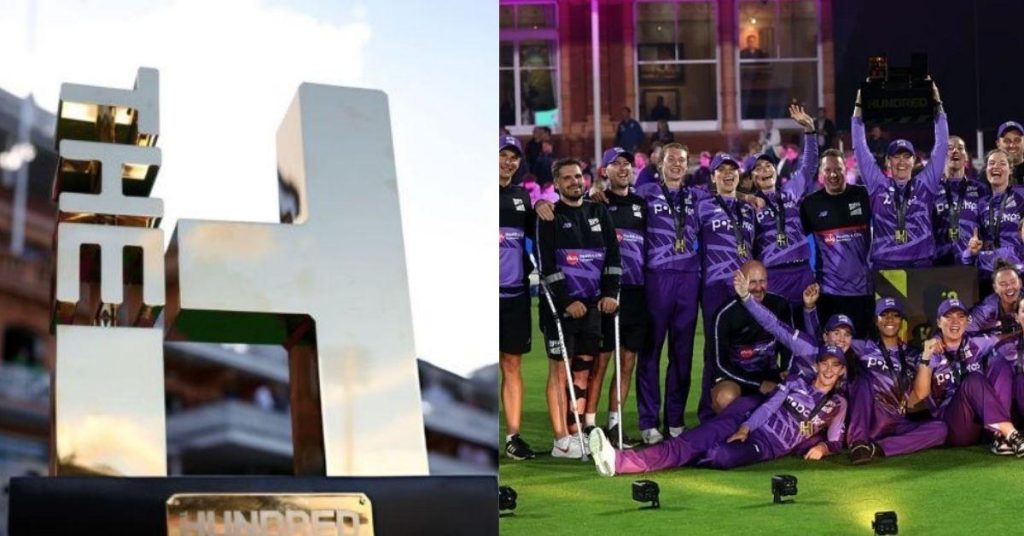
The Hundred Men and Women competitions follow the same 100-ball format and playing rules but differ in scoring, player salaries, and audience engagement.
The 2026 season introduces a new auction system, franchise rebranding, and higher player salaries. While the men’s competition is known for bigger scores, the women’s tournament continues to produce closely contested matches.
This guide compares both competitions across format, stats, salaries, attendance, and other key differences.
The Hundred Men vs Women Comparison – Key Stats & Differences
Here are the main statistical differences between the two competitions, based on data from the 2026 season.
| Parameter | Men’s Hundred (2026) | Women’s Hundred (2026) |
|---|---|---|
| Format | 100 balls per innings | 100 balls per innings |
| Teams | 8 | 8 |
| League Matches | 34 | 34 |
| Tournament Format | League + Eliminator + Final | League + Eliminator + Final |
| Overseas Players | Up to 4 per squad | Up to 4 per squad |
| Prize Money | Increased for 2026 | Increased significantly for 2026 |
| Team Rebranding | MI London, Sunrisers Leeds, Manchester Super Giants | MI London, Sunrisers Leeds, Manchester Super Giants |
| Combined Club Trophy | Included | Included |
| Final Venue | Lord’s | Lord’s |
| Tournament Dates | 21 July – 16 August 2026 | 21 July – 16 August 2026 |
Economy rates are estimated equivalents derived from average team scores (runs per 100 balls converted to a per-6-ball basis) and are not directly sourced from the Stats Centre.
Sources: ESPNcricinfo Men’s 2026| ESPNcricinfo Women’s 2026

The women’s competition consistently produces tighter contests. The men’s game delivers more raw power, but the margins in the women’s competition are smaller, and the cricket is often closer.
Are the Rules Different In The Hundred Men vs Women?
No. Both competitions follow exactly the same rules and playing conditions.
Each innings is 100 balls long, bowled in sets of 5 or 10. The powerplay covers the first 25 balls, with only two fielders allowed outside the circle. Both competitions use the same eight venues and run on the same days as double-headers, with the women’s match played first.
Official playing conditions: thehundred.com/info/rules
The Hundred Prize Money & Salary Comparison 2026
Prize money is equal for both competitions. The winners take home £150,000, and the runners-up receive £75,000. Player salaries, however, still show a clear gap.
For 2026, The Hundred moved to an open auction system for the first time, replacing the fixed salary band model used in all previous seasons.
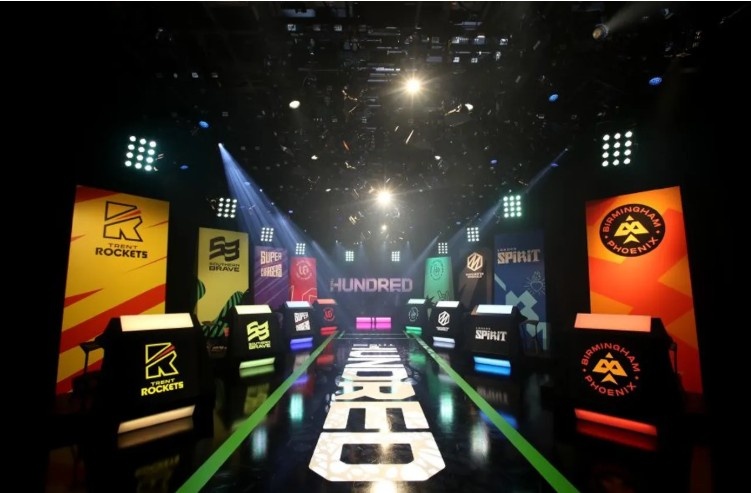
The tables below show both the 2025 fixed bands (the last year bands existed) and the 2026 auction results side by side, so you can see exactly how much salaries have moved.
The Hundred 2026 Salary Structure (Auction Era)
| Category | Men’s Competition | Women’s Competition |
|---|---|---|
| Salary Cap (per team) | £2.05 million | £880,000 |
| Highest Known Salary | £465,000 (Harry Brook) | £210,000 (Beth Mooney & Sophie Devine) |
| Minimum Salary | £31,000 | £15,000 |
| Player Allocation | Auction + Direct Signings | Auction + Direct Signings |
| Salary Bands | Removed | Removed |
| System Used | Open Auction | Open Auction |
Source: The Hundred official salary
The Hundred 2026 – Key Confirmed Salaries After Auction
From 2026, fixed bands no longer exist. Teams bid freely within a salary cap of £2.05 million per men’s team and £880,000 per women’s team.
| Category | Men’s (2026) | Women’s (2026) |
|---|---|---|
| Highest paid (pre-auction) | Harry Brook – £465,000 | Sophie Devine / Beth Mooney – £210,000 each |
| Highest paid (at auction) | James Coles – £390,000 | Dani Gibson – £190,000 |
| Mid-range examples | Joe Root £240k, Adil Rashid £250k, Tom Curran £260k | Lauren Bell £140k, Nat Sciver-Brunt £140k |
| Minimum base price | £31,000 | £15,000 |
Sources: ESPNCricinfo and BBC

The salary gap still exists, but 2026 marks the biggest single rate of financial growth for women’s players in the competition’s history. The women’s salary pot doubled from £440,000 to £880,000 per team in one season.
Batting & Bowling Comparison – Men vs Women in The Hundred
Scoring patterns and bowling styles differ clearly between the two competitions, and the data backs that up.
Batting Approach & Scoring Patterns
Men’s players produce higher strike rates and more sixes. In 2025, Donavan Ferreira averaged a six every 4.28 balls faced, with a strike rate of 235 runs per 100 balls. Jordan Cox hit 22 sixes, the most in any men’s edition since Liam Livingstone in 2021.
Women’s batting focuses more on strike rotation and building partnerships. Nat Sciver-Brunt averaged over 45 runs per innings across five hundred seasons, the highest average of any player with 1,000-plus runs in the competition.
Bowling Impact & Match Balance
Women’s bowlers maintain tighter economies, creating more balanced contests. Lauren Bell became the first player to take 50 wickets in The Hundred’s history in 2025.
Men’s matches regularly see teams post 160-plus totals. The economic difference between the two competitions reflects how much harder run-scoring is in the women’s game, which means every wicket and dot ball carries more weight.

Both formats reward consistent bowlers, but the tighter scoring in the women’s game makes bowling performances more decisive.
The Hundred Men’s vs Women’s Competition – Differences
The Hundred men’s and women’s competitions follow the same 100-ball format, but there are notable differences in scoring, six-hitting, popularity and player salaries.
1. Which Has Higher Scores?
The men’s competition generally produces higher team totals, although the women’s competition has also recorded big individual performances.
2. Which Has More Sixes?
The men’s competition has a clear edge in six-hitting, with 371 sixes in 2025. Liam Livingstone leads the men’s all-time sixes chart.
3. Which Has More Close Matches?
Both competitions produce close finishes, particularly in the final stages. A useful comparison is matches decided by five runs or fewer, five wickets or fewer, or a Super Over.
4. Which Is More Popular?
The women’s competition has grown rapidly, recording 349,401 spectators in 2025, a record attendance for a women’s cricket competition at the time.
5. Which Pays Players More?
Men’s players currently earn more. For 2026, each men’s team has a £2.05 million salary pot, compared with £880,000 for women’s teams. However, the women’s salary pot doubled for 2026.
Attendance & Popularity – Why Women’s Hundred is Growing
The women’s competition has grown at a pace that outpaces most predictions, and the attendance numbers reflect that clearly.
- Women’s 2025 attendance: 349,401, setting the global record for the highest total attendance at a women’s cricket competition (The Hundred)
- Cumulative women’s attendance since 2021 has crossed 1.5 million fans.
- Double-headers have driven family attendance, now over 40% of all spectators at the tournament.
- The 2025 women’s final at Lord’s drew 22,542 spectators in a sold-out ground.
- THE UK TV viewership gap between the men’s and women’s competitions narrowed by roughly 60% between 2021 and 2024.
Sources: CricExec attendance report
These figures point to genuine fan growth, not just the double-header effect. Fans are now attending women’s matches on merit, and that shift in behaviour is what makes these numbers significant.
Criticism of The Hundred – Men vs Women Perspective
Both competitions face valid criticism, though the nature of that criticism differs.
Critics argue the 100-ball format fails to meaningfully differentiate from T20 cricket while alienating purists. The scheduling of The Hundred crowds out county cricket during peak summer months.

The Hundred’s format remains an outlier, with other franchise tournaments using the T20 format that has grown since the advent of the IPL in 2007. On gender parity,
The Hundred earns credit for equal venues and equal prize money, but England captain Heather Knight called the widening salary gap in 2025 “not ideal,” noting that it looks poor despite overall progress.
Suggested Reads:
Conclusion: The Hundred Men Bring Power While The Women’s Game Brings Precision
Both competitions use the same 100-ball format and rules. The men’s game offers higher scores and more sixes. The women’s game delivers tighter contests and a faster-growing fanbase.
Salaries are still not equal, but 2026 marks the biggest single pay rise in women’s competition history. Women’s attendance now surpasses most global women’s sports events.
Want close finishes? Follow the women’s competition. Want power hitting and big scores? Follow the men’s. Either way, The Hundred is worth watching.
FAQs
Mithali Raj holds the record for the most runs in women’s international cricket. Smriti Mandhana is widely called the modern queen of cricket for her dominance across all formats.
The format is considered too similar to T20 to justify a separate competition, while its scheduling displaces county cricket and the gender pay gap contradicts the competition’s equal-billing approach.
Meg Lanning and Smriti Mandhana are joint record holders for the most centuries in international cricket, with 17 each across all formats as of December 2025.
No. The Hundred runs separate men’s and women’s competitions, but both play at the same venues on the same day as double-headers, giving each competition equal visibility and the same audience.