
In the AFC Women’s Asian Cup, Japan holds a strong edge over Australia, with the rivalry producing two consecutive final meetings in 2014 and 2018.
Both nations rank among the most consistent performers in Asian women’s football since Australia joined the AFC in 2006.
This article covers every confirmed match result, the full head-to-head record, key players, tactical patterns, and the latest 2026 tournament status.
Japan vs Australia Head-to-Head Record in AFC Women’s Asian Cup
In their most significant encounters since 2006, Japan holds a clear winning edge over Australia across all stages of the AFC Women’s Asian Cup.
The table below covers all six confirmed meetings between Japan and Australia in the AFC Women’s Asian Cup competition.
| Statistic | Japan | Australia |
|---|---|---|
| Matches Played | 6 | 6 |
| Wins | 3 | 2 |
| Draws | 1 | 1 |
| Goals Scored | 6 | 4 |
Japan’s 3 wins from 6 meetings, including victories in both the 2014 and 2018 finals, reflect how consistently they have performed against Australia when the stakes are highest.
Japan vs Australia AFC Women’s Asian Cup Results by Year
Japan and Australia have met in the AFC Women’s Asian Cup across multiple editions, from the 2006 semifinal through to the back-to-back finals of 2014 and 2018.
| Year | Stage | Result |
|---|---|---|
| 2006 | Semifinal | Australia 2–0 Japan |
| 2008 | Third Place Play-off | Japan 3–0 Australia |
| 2010 | Semifinal | Australia 1–0 Japan |
| 2014 | Final | Japan 1–0 Australia |
| 2018 | Group Stage | Japan 1–1 Australia |
| 2018 | Final | Japan 1–0 Australia |
Australia won the 2006 semifinal 2-0 in Adelaide, ending Japan’s path to the final that year. Japan responded in 2008 by beating Australia 3-0 in the third-place match. (Source: Maltidas)
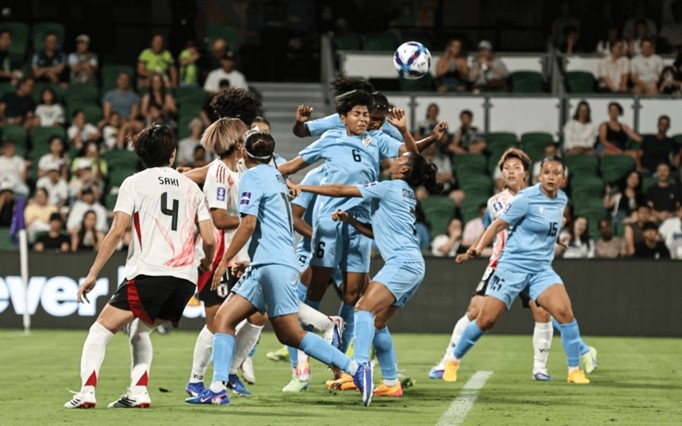
Australia then won the 2010 semifinal before Japan turned the tables completely in 2014 and 2018, winning both finals 1-0. The 2018 tournament is the only edition where the teams met twice, in the group stage and then again in the final. (Source: Outlook India)
Three of the six matches ended with a single-goal margin, which shows just how tight this fixture tends to be.
Key Players in Japan vs Australia AFC Women’s Asian Cup Matches
Several players shaped this rivalry across multiple editions, scoring decisive goals, captaining their sides, and delivering key performances in finals and knockout matches.
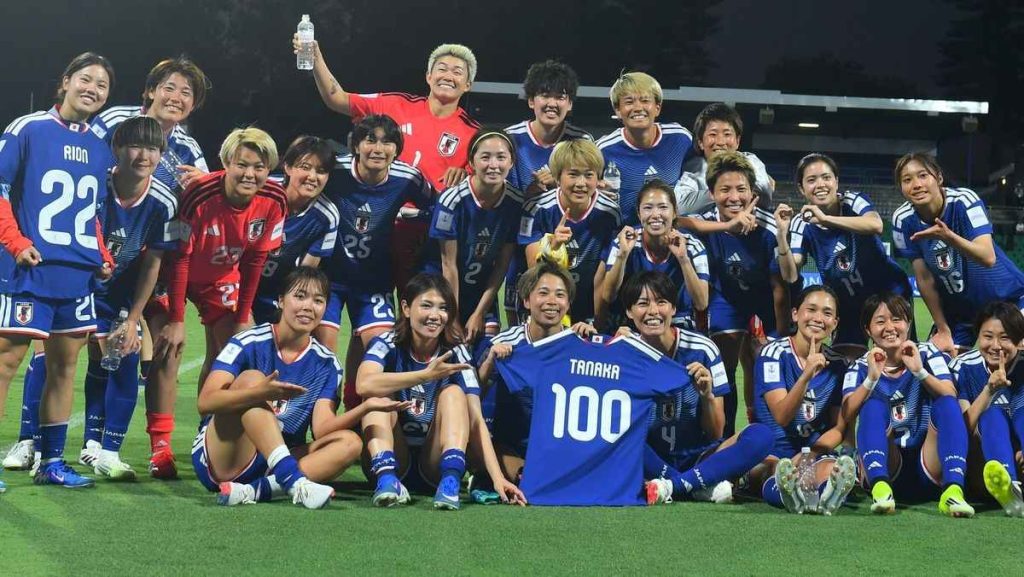
Japan’s Key Players:
- Kumi Yokoyama – scored the title-winning goal in the 2018 final as a substitute in the 84th minute.
- Mana Iwabuchi – named tournament MVP at the 2018 AFC Women’s Asian Cup; crucial across the knockout stage.
- Yui Hasegawa – provided the assist for Yokoyama’s 2018 final winner and featured across multiple editions.
- Saki Kumagai – long-serving defensive captain who appeared in multiple Asian Cup campaigns against Australia.
- Homare Sawa – Japan’s creative leader and standout performer through the 2006, 2008, and 2010 meetings. (Source: Maltidas)
Australia’s Key Players:
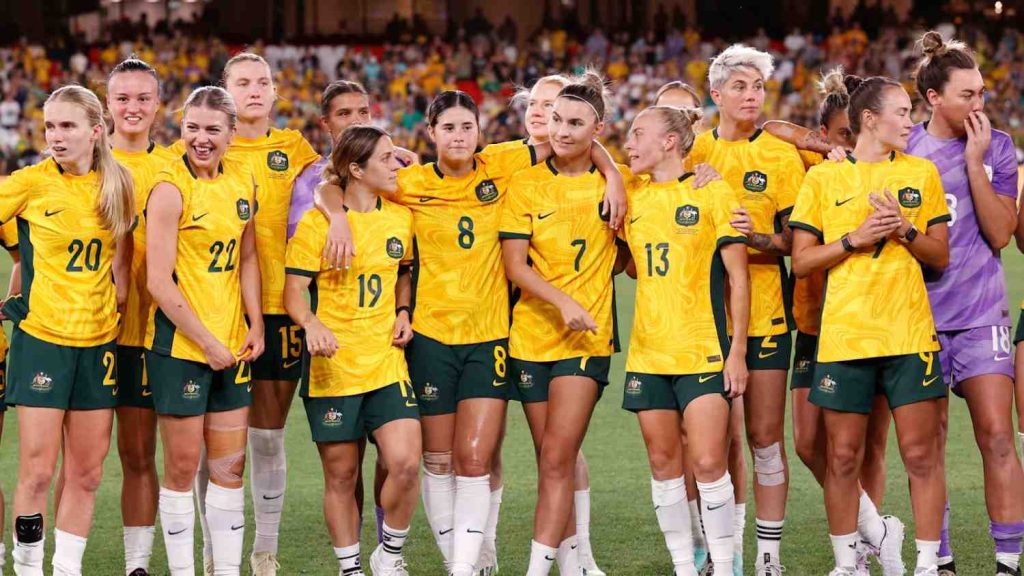
- Sam Kerr – Australia’s captain and all-time AFC Women’s Asian Cup top scorer, featuring in multiple editions of this fixture from 2010 onward.
- Lisa De Vanna – appeared across several Asian Cup editions and was consistently dangerous against Japan.
- Elise Kellond-Knight – missed a penalty in the 14th minute of the 2018 final that could have altered the outcome entirely.
- Clare Polkinghorne – a reliable defensive leader who featured in both the 2014 and 2018 final meetings.
Players who appeared across three or more editions brought experience and leadership that gave these matches their competitive depth and consistent intensity.
Japan vs Australia Tactical Comparison and Match Analysis
Key tactical observations from their AFC Women’s Asian Cup meetings:
- Japan’s defensive record in this fixture is exceptional. They have conceded just two goals across six meetings, keeping clean sheets in four of them.
- Australia creates chances but struggles to convert. In the 2018 final, Australia had more possession but could not score, partly due to a penalty miss by Kellond-Knight in the 14th minute.
- Japan’s counter-attacking precision has been the defining factor in both finals. Limited chances, clean execution, identical 1-0 scorelines.
- Australia’s best results in this fixture (2006 and 2010) came from set pieces and direct attacking play before Japan tightened their defensive structure in later editions.
- Key statistical trend: Japan wins with fewer opportunities but converts them at a higher rate, while Australia’s total shot count tends to exceed Japan’s in most meetings.
The tactical gap has narrowed over time. But Japan’s ability to manage pressure and score at critical moments has repeatedly proved the difference.
Current Context: AFC Women’s Asian Cup 2026
Both Japan and Australia advanced from the group stage to the quarterfinals with their records intact, keeping alive the possibility of a seventh meeting later in the tournament.
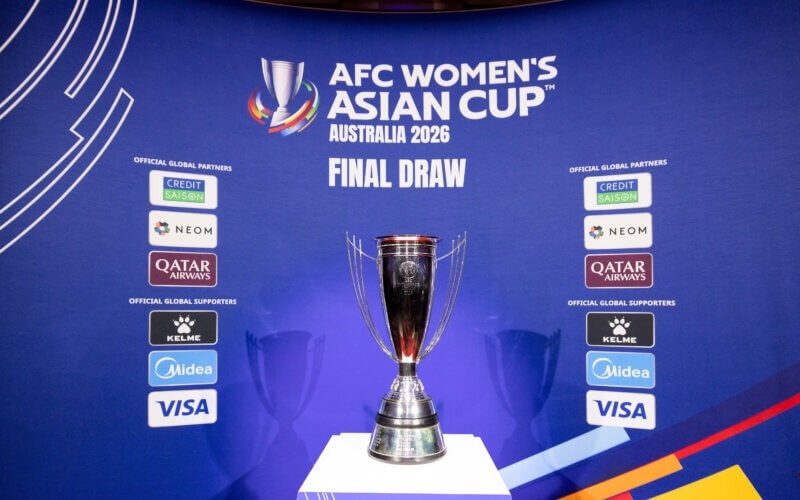
The table below shows how both teams finished their respective group stages.
| Team | Group | P | W | D | L | GF | GA | GD | Pts |
|---|---|---|---|---|---|---|---|---|---|
| Japan | C | 3 | 3 | 0 | 0 | 17 | 0 | +17 | 9 |
| Australia | A | 3 | 2 | 1 | 0 | 8 | 3 | +5 | 7 |
Source: AFC
Key 2026 tournament details as of 11 March 2026:
- Japan won Group C with three wins from three matches and a tournament-leading 17 goals, remaining the only side in the competition not to concede a single goal. (Source: Outlook India)
- Australia advanced from Group A as runners-up, with South Korea finishing first in the group.
- The quarterfinals begin on 13 March 2026, with Japan facing the Philippines and Australia taking on Korea DPR.
- The four quarterfinal winners qualify directly for the 2027 FIFA Women’s World Cup in Brazil; the four losing teams enter play-in matches for the remaining spots.
- The final is scheduled for 21 March 2026 at Stadium Australia in Sydney.
If both nations advance past the quarterfinals and into the same side of the draw, a semifinal clash would carry the added weight of automatic World Cup qualification.
Suggested Reads:
Conclusion: Japan vs Australia AFC Women’s Asian Cup Stands At 3 Wins For Japan From 6 Matches
Japan leads the AFC Women’s Asian Cup head-to-head record against Australia with 3 wins from 6 meetings, including two consecutive final victories in 2014 and 2018.
Australia has won twice, in the 2006 and 2010 semifinals, and remains a consistent threat at every stage. With the 2026 quarterfinals starting on 13 March, and World Cup spots on the line, this rivalry could produce its most important chapter yet.
Follow the official AFC Women’s Asian Cup page for live standings, quarterfinal results, and full match reports.
FAQs
Twelve teams compete across three groups: Australia, South Korea, Iran, Philippines, China PR, DPR Korea, Bangladesh, Uzbekistan, Japan, Vietnam, India, and Chinese Taipei.
In Australia, every match airs live on Network 10 and Paramount+. Japanese viewers can watch via DAZN. For regions without a broadcast deal, the official AFC YouTube channel streams all matches live.
Japan won the 2011 FIFA Women’s World Cup, becoming the first Asian nation to claim the title after defeating the United States on penalties. They reached the 2015 final as well, finishing as runners-up against the same opponent.
Australia is hosting the 2026 edition across Perth, Gold Coast, and Sydney, with the final scheduled for 21 March at Stadium Australia in Sydney.