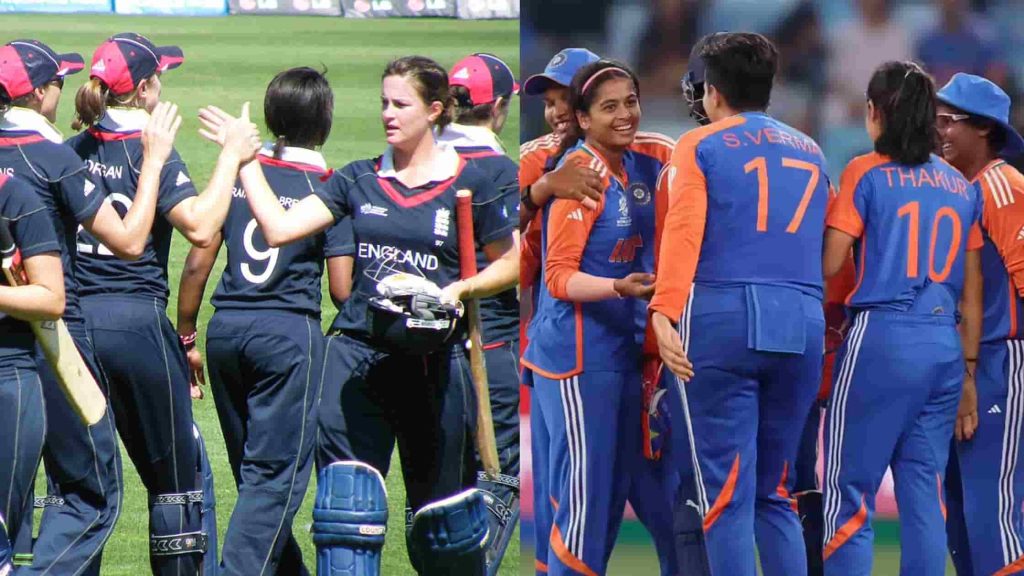
England set the record for the biggest successful chase in the ICC Women’s T20 World Cup, scoring 165/2 against Australia in 2009. This total still stands out, especially since early editions of the tournament had generally low scores.
Chasing big totals has become easier over the years, but anything above 150 still requires careful planning. Teams focus on steady partnerships, smart pacing, and finishing well rather than constantly hitting boundaries.
Read in to learn about the top five most impressive run chases in the Women’s T20 World Cup.
Highest Successful Run Chases In Women’s T20 World Cup: Overview
This table provides an overview of the highest successful run chases in the ICC Women’s T20 World Cup, including team scores, opposition, venues, and match timelines.
| Rank | Team | Score | Opposition | Venue | Date |
|---|---|---|---|---|---|
| 1 | England | 165/2 | Australia | The Oval, London | 19 June 2009 |
| 2 | India | 151/3 | Pakistan | Cape Town | 12 Feb 2023 |
| 3 | West Indies | 149/2 | Australia | Kolkata | 3 Apr 2016 |
| 4 | England | 146/3 | Australia | Galle | 1 Oct 2012 |
| 5 | West Indies | 144/4 | England | Dubai | 15 Oct 2024 |
1. England – 165/2 vs Australia (2009)
England’s 165/2 chase was anchored by an unbeaten 122-run partnership between Charlotte Edwards (80 off 56) and Claire Taylor (76 off 53), after joining at 43/2. That stand essentially decided the match.
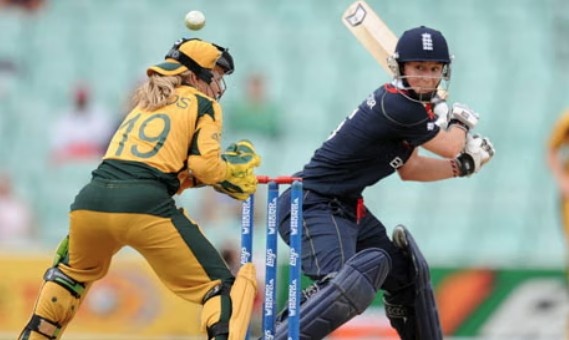
The pair focused on measured strokeplay, keeping the required run rate under control and never allowing Australia to mount a comeback.
In a low-scoring era, this precise chase highlighted England’s recovery into dominance, setting a record that still stands in Women’s T20 World Cup history.
2. India – 151/3 vs Pakistan (2023)
India’s 151/3 victory was shaped by Jemimah Rodrigues’ 53 off 38 balls, with Richa Ghosh’s 31 off 20, including three consecutive boundaries in the 18th over, being the decisive factor.
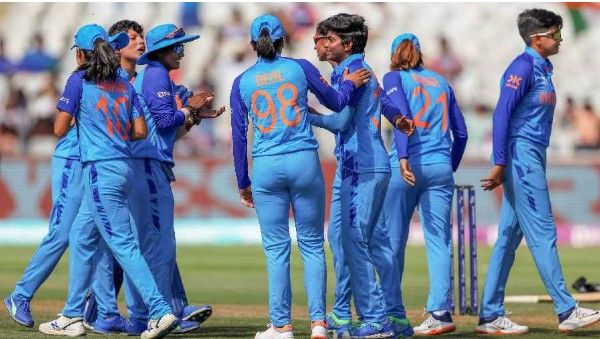
Jemimah anchored the middle overs, ensuring the chase stayed under control, while Richa’s late burst instantly shifted momentum.
The innings showcased how careful pacing, combined with strong finishing, can turn tense situations into comfortable wins.
3. West Indies – 149/2 vs Australia (2016)
West Indies’ 149/2 chase in the 2016 Final relied on a 120-run opening partnership between Hayley Matthews (66) and Stafanie Taylor (59), both maintaining strike rates above 120.
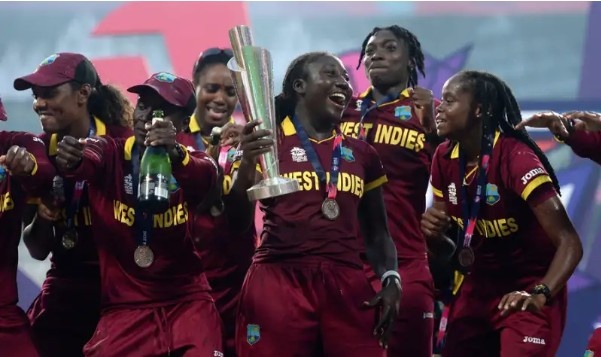
Rather than one anchor and one attacker, both batters kept steady aggression throughout, pressuring Australia from the start.
The strong opening partnership removed uncertainty, allowing West Indies to dominate the final and complete one of the most commanding chases in tournament history.
4. England – 146/3 vs Australia (2012)
England’s 146/3 chase was guided by Sarah Taylor (65 off 53), who kept the innings steady, while Danni Wyatt-Hodge (33 off 17) provided the finishing boost with 11 balls to spare.
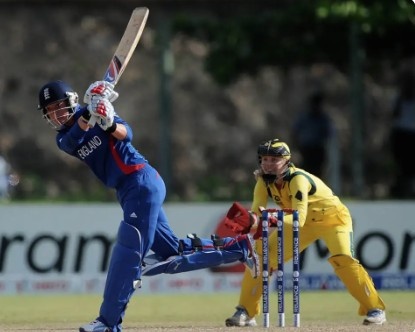
Sarah’s stability set the foundation, but Danni’s acceleration changed the game’s pace. This blend of steady innings and late aggression ensured England closed the chase efficiently.
5. West Indies – 144/4 vs England (2024)
West Indies’ 144/4 chase began explosively with a 67-run Powerplay without loss, the highest of the tournament, immediately putting England under pressure.
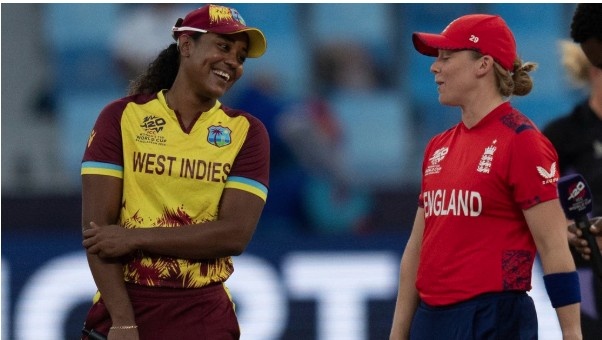
A 102-run opening stand between Qiana Joseph (52 off 38) and Hayley Matthews (50 off 38) in just 12.2 overs defined the match.
By attacking early and maintaining control despite losing wickets later, the West Indies demonstrated how Powerplay dominance can dictate the outcome of T20 games.
Read Next:
Conclusion: England’s 165/2 Remains The Highest Successful Run Chase In ICC Women’s T20 World Cup
The record for the highest winning chase in the ICC Women’s T20 World Cup shows that totals between 150 and 165 remain highly competitive across eras.
England’s 165 in 2009 continues to set the benchmark, emphasizing its significance in the tournament’s history.
Successful chases often follow a consistent formula: solid partnerships, well-paced middle overs, and decisive finishing matter more than nonstop attacking.
As women’s T20 cricket advances, larger targets may be achieved. For now, these games demonstrate that careful planning and execution remain the key to winning run chases.