Thirteen gold medals. That is what India has collected across the Men’s and Women’s Asian Kabaddi Championship since the tournament began in 1980. No other country has more than one.
The Men’s team has won eight titles in nine editions, with only Iran breaking through in 2003. The Women’s team has won five of six editions, with South Korea’s 2016 home win being the only exception.
This article covers every edition of both tournaments, with results, key moments, and the full story behind each gold medal.
Asian Kabaddi Championship Winners List: Men and Women
The Asian Kabaddi Championship has been running since 1980 for Men and 2005 for Women. Below is the complete record of every gold, silver, and bronze medal across all editions of the tournament. Here is the full winners’ list for both the Men’s and Women’s Asian Kabaddi Championship across all editions.
Men’s Asian Kabaddi Championship
| Year | Gold | Silver | Bronze | Host |
|---|---|---|---|---|
| 1980 | India | Bangladesh | Nepal | Kolkata, India |
| 1988 | India | Bangladesh | – | Jaipur, India |
| 2000 | India | Sri Lanka | Pakistan | Colombo, Sri Lanka |
| 2001 | India | Thailand | – | Bangkok, Thailand |
| 2002 | India | Japan | Iran | Kuala Lumpur, Malaysia |
| 2003 | Iran | Malaysia | Sri Lanka | Kangar, Malaysia |
| 2005 | India | Pakistan | Iran | Tehran, Iran |
| 2017 | India | Pakistan | Iran / South Korea | Gorgan, Iran |
| 2023 | India | Iran | Chinese Taipei | Busan, South Korea |
Women’s Asian Kabaddi Championship
| Year | Gold | Silver | Bronze | Host |
|---|---|---|---|---|
| 2005 | India | Japan | Sri Lanka / Bangladesh | Hyderabad, India |
| 2007 | India | Iran | Sri Lanka / Thailand | Tehran, Iran |
| 2008 | India | Iran | Japan / Thailand | Madurai, India |
| 2016 | South Korea | Thailand | Iran / Sri Lanka | Busan, South Korea |
| 2017 | India | South Korea | Iran / Sri Lanka | Gorgan, Iran |
| 2025 | India | Iran | Nepal / Bangladesh | Tehran, Iran |
India leads the overall medal count across both events, with the Men’s team winning eight titles and the Women’s team winning five titles across their respective histories.
Men’s Tournament Summaries: Edition by Edition
Here is how each Men’s tournament played out from the very beginning.
1980 Asian Kabaddi Championship: India
The first-ever Asian Kabaddi Championship was held in Kolkata, India, in 1980, making India the host of the tournament’s birth. India won the gold medal, with Bangladesh taking silver and Nepal the bronze.
The tournament marked the formal recognition of kabaddi as a competitive Asian sport at the continental level. India set the standard from the very first edition and gave every other nation a target they would spend the next four decades trying to reach.
1988 Asian Kabaddi Championship: India
India hosted the second edition in Jaipur in 1988 and once again claimed the gold medal, with Bangladesh finishing as runners-up for the second time in a row. The eight-year gap between the 1980 and 1988 editions reflected the early challenges of organising continental kabaddi consistently.
India’s back-to-back titles confirmed that they were not just the strongest team in the region but also the team most responsible for carrying the sport forward across Asia.
2000 Asian Kabaddi Championship: India
After a twelve-year gap, the tournament returned in 2000 in Colombo, Sri Lanka, with India again taking gold. Sri Lanka won their only silver medal on home soil, and Pakistan took the bronze.
The 2000 edition marked the tournament’s return after its longest break and showed that kabaddi was still alive and competitive across the region. India’s third gold, coming after more than a decade away from the championship, showed how dominant their programme remained even without regular competition.
2001 Asian Kabaddi Championship: India
The 2001 edition was held in Bangkok, Thailand, just one year after the Colombo tournament, and India won their fourth gold in as many attempts. Thailand, playing on home soil, earned the silver medal.
The back-to-back editions in 2000 and 2001 brought a new energy to the championship and helped grow the sport in Southeast Asia. India had now won every single edition of the Men’s Asian Kabaddi Championship, a record no other team looked capable of threatening at this point.
2002 Asian Kabaddi Championship: India
Kuala Lumpur, Malaysia, hosted the 2002 edition, and India continued their unbeaten run with another gold medal. Japan finished second, earningitsr only silver in the Men’s championship, and Iran took the bronze.
This was Iran’s first appearance on the medal podium in the Men’s event, a sign of things to come. India had now gone five tournaments without defeat, and the rest of Asia was still searching for a formula that could stop them from winning a sixth time.
2003 Asian Kabaddi Championship: Iran
The 2003 edition in Kangar, Malaysia, produced the first real shock in the tournament’s history. Iran broke India’s five-edition winning streak and claimed the gold medal, with Malaysia winning their only silver and Sri Lanka taking bronze.
It was the only time between 1980 and 2023 that India did not win the Men’s title. Iran’s victory in 2003 showed that the gap between India and the rest of Asia was closing, and that continental kabaddi was becoming genuinely competitive.
2005 Asian Kabaddi Championship: India
India returned to gold in 2005, hosted in Tehran, Iran. The fact that they won it on Iranian soil, just two years after Iran had beaten them for the title, made the victory even more significant. Pakistan took the silver, and Iran finished with bronze.
India’s response to their 2003 defeat was immediate and dominant. They made it clear that losing one edition was an exception rather than a pattern. The 2005 title put India back at the top and confirmed that their 2003 loss was a warning they had taken seriously.
2017 Asian Kabaddi Championship: India
The 2017 edition was held in Gorgan, Iran, and India won the gold again, with Pakistan taking silver and both Iran and South Korea sharing the bronze. The tournament had now evolved significantly from its early days, with more nations competing at a higher level across all positions.
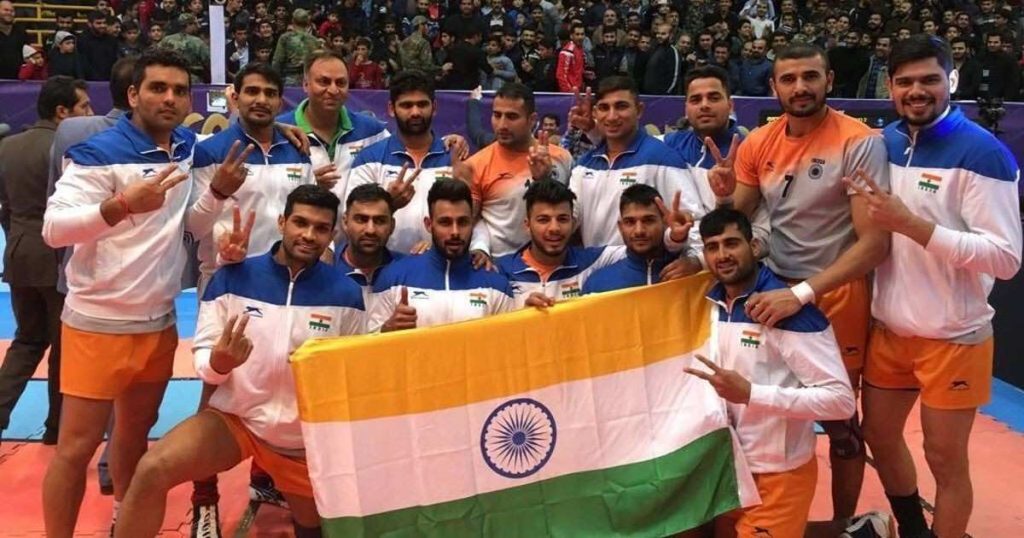
India’s win in 2017 was their seventh Men’s title and came in a period when Indian kabaddi was growing rapidly at home through the Pro Kabaddi League, which had started in 2014 and transformed the sport’s profile across the country.
2023 Asian Kabaddi Championship: India
The 2023 edition in Busan, South Korea, ea brought India their eighth Men’s title, with Iran taking silver and Chinese Taipei winning the bronze. India’s dominance across four decades of Men’s kabaddi at the Asian level is a record that places them among the most successful nations in any single sport at a continental championship level.
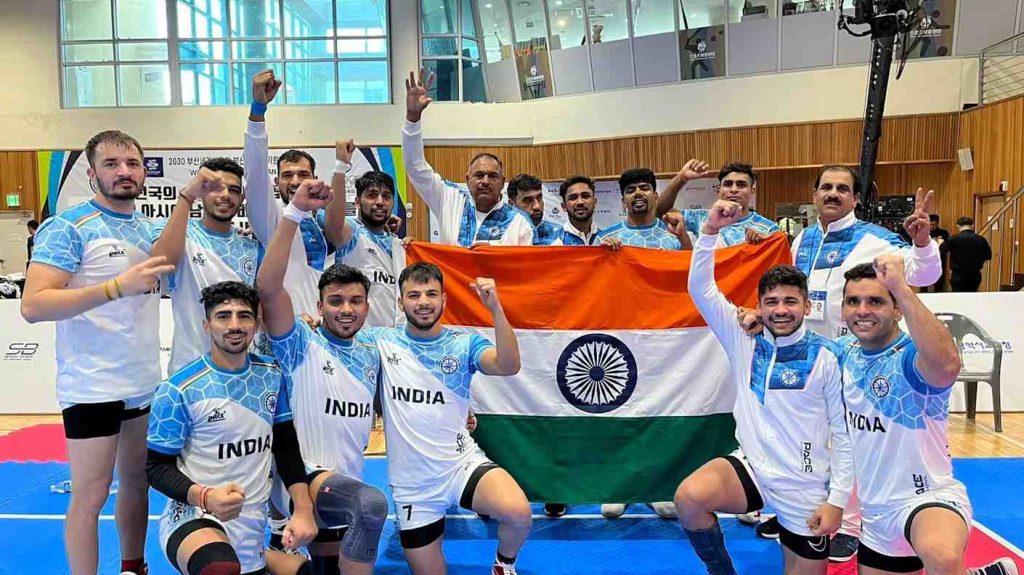
Iran’s silver confirmed them as the most consistent challengers, and Chinese Taipei’s bronze showed that the competition continues to grow beyond its traditional strongholds.
Women’s Tournament Summaries: Edition by Edition
Here is what happened at each edition and how the tournament has grown since its launch.
2005 Asian Kabaddi Championship (Women): India
The first Women’s Asian Kabaddi Championship was held in Hyderabad, India, in 2005. India won the inaugural gold, Japan took the silver, and Sri Lanka and Bangladesh shared the bronze.
The tournament’s launch in 2005 was a significant step for women’s kabaddi in Asia, giving female athletes a continental platform for the first time. India set the tone from game one, and Japan’s silver medal was a surprise result that showed women’s kabaddi had already spread across different parts of Asia.
2007 Asian Kabaddi Championship (Women): India
The 2007 Women’s edition was held in Tehran, Iran. India won gold again, Iran took the silver on home soil, and Sri Lanka and Thailand shared the bronze. Iran’s rise to the Women’s podium in just the second edition of the tournament was significant.
They would go on to be the most consistent challenger to India in the Women’s game. India’s second straight Women’s title in two editions showed that their dominance was not going to be limited to the Men’s side of the sport alone.
2008 Asian Kabaddi Championship (Women): India
India hosted the 2008 Women’s edition in Madurai and won their third consecutive gold medal. Iran again finished as runners-up, and Japan and Thailand shared the bronze. Three gold medals in three editions of the Women’s championship put India in the same position of dominance as their Men’s team.
The 2008 edition also confirmed Iran as the strongest challenger, as they had now won two silvers in a row and were building a Women’s kabaddi programme capable of competing at the highest level consistently.
2016 Asian Kabaddi Championship (Women): South Korea
The 2016 Women’s edition in Busan, South Korea, produced the only non-Indian gold in the Women’s tournament history. South Korea won on home soil, with Thailand taking silver and Iran and Sri Lanka sharing the bronze.
South Korea’s gold in 2016 broke India’s three-edition streak and showed that host-nation advantage, combined with strong preparation, could still upset the established order.
It remains the only edition of the Women’s championship that India did not win, making South Korea one of only two nations, alongside Iran,n to ever break Indian dominance in this tournament.
2017 Asian Kabaddi Championship (Women): India
India came back strongly in 2017 in Gorgan, Iran, winning their fourth Women’s gold. South Korea took the silver, er and Iran and Sri Lanka shared the bronze. India’s return to the top after the 2016 setback showed a team that responded quickly to defeat.
The 2017 edition was played just one year after South Korea’s historic win, and India made sure the gold came back to them before any other team could build on that momentum. Four titles in five Women’s editions remained a remarkable record of consistency.
2025 Asian Kabaddi Championship (Women): India
The 2025 Women’s edition was held in Tehran, Iran, and India claimed their fifth gold. Iran took the silver, and Nepal and Bangladesh shared the bronze. India’s fifth Women’s title came 20 years after they won the very first edition in Hyderabad.
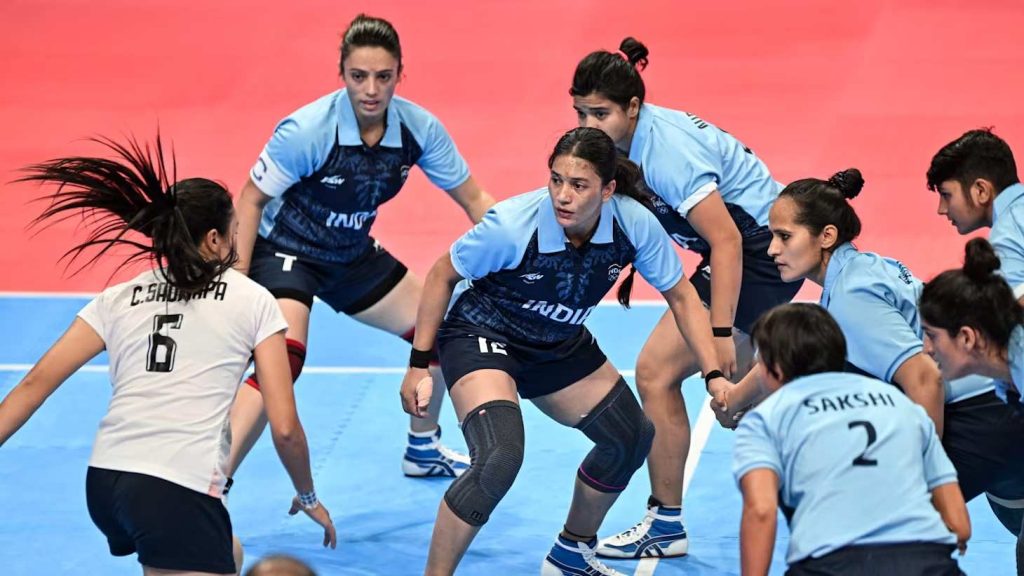
The 2025 result extended their record as the most successful nation in Women’s Asian Kabaddi history. Iran’s silver once again confirmed them as the closest challengers, and Nepal’s bronze was a sign that the Women’s tournament continues to grow beyond the sport’s traditional powerhouses.
Nation-Wise Asian Kabaddi Championship Titles
India leads both the Men’s and Women’s title counts with a combined total of thirteen Asian Kabaddi Championship gold medals. No other nation comes close to matching that number across both events.
Here is the complete breakdown of titles won by each nation across both the Men’s and Women’s Asian Kabaddi Championship.
Men’s Titles
| Team | Titles Won | Years Won |
|---|---|---|
| India | 8 | 1980, 1988, 2000, 2001, 2002, 2005, 2017, 2023 |
| Iran | 1 | 2003 |
Women’s Titles
| Team | Titles Won | Years Won |
|---|---|---|
| India | 5 | 2005, 2007, 2008, 2017, 2025 |
| South Korea | 1 | 2016 |
India holds eight Men’s titles and five Women’s titles, for a combined total of thirteen gold medals across the full history of the Asian Kabaddi Championship. Iran and South Korea are the only other nations to have won a gold medal in either event.
Records and Notable Moments in the Asian Kabaddi Championship
India has won the Men’s title in every single edition except 2003, when Iran claimed gold in Kangar, Malaysia. That remains the only time in the Men’s tournament’s history that the gold has gone to anyone other than India.
On the Women’s side, South Korea’s 2016 win on home soil in Busan is the only instance of a non-Indian team winning the Women’s championship. The tournament has been held across nine Asian countries, from India and Iran to Malaysia, South Korea, and Sri Lanka, showing how widely kabaddi has spread across the continent since 1980.
Suggested Reads:
Conclusion: India’s Record That No Nation Can Match
The Asian Kabaddi Championship belongs to India in a way that few sporting records do. Thirteen gold medals across Men’s and Women’s events, across four decades and nine host nations, tell a story of a country that took its national sport to the continental level and never let go of it.
Iran and South Korea have both shown they can win. But India keeps coming back. The next edition will tell us whether anyone has finally found a way to change that.