In every edition of the AFC Women’s Asian Cup, the Golden Boot has revealed the tournament’s most decisive attackers.
Since the competition began in 1975, top scorers have often shaped how campaigns unfolded through record goal tallies, group-stage dominance, and knockout-stage impact. The numbers tell striking stories.
Mio Otani scored 16 goals in 2001, the highest in tournament history, while Ri Kum-suk’s seven goals powered North Korea’s 2008 title run.
With the 2026 AFC Women’s Asian Cup currently underway in Australia from March 1 to March 21, the race for the next Golden Boot has once again become one of the tournament’s defining narratives.
AFC Women’s Asian Cup Golden Boot Winners
| Year | Host Country | Golden Boot Winner | Country | Goals | Team Finish |
|---|---|---|---|---|---|
| 2022 | India | Sam Kerr | Australia | 7 | Quarter-finals |
| 2018 | Jordan | Li Ying | China PR | 7 | Third Place |
| 2014 | Vietnam | Park Eun-sun / Yang Li | South Korea / China PR | 6 | Fourth / Third |
| 2010 | China | Kozue Ando | Japan | 3 | Third Place |
| 2008 | Vietnam | Ri Kum-suk | North Korea | 7 | Champions |
| 2006 | Australia | Yuki Nagasato / Jung Jung-suk | Japan / South Korea | 7 | Fourth / Group Stage |
| 2003 | Thailand | Homare Sawa | Japan | 6 | Fourth Place |
| 2001 | Taiwan | Mio Otani | Japan | 16 | Runners-up |
1. Sam Kerr — Australia (7 Goals)
The 2022 AFC Women’s Asian Cup in India featured a 12-team format, and Australia’s attacking dominance in the group stage was largely driven by Sam Kerr’s finishing.

Kerr scored 7 goals, including 5 in the record 18–0 victory over Indonesia, which remains the largest win in tournament history. She added one goal each against the Philippines and Thailand, accounting for a significant portion of Australia’s 24 group-stage goals. Her scoring ensured Australia finished first in their group with maximum points.
Despite the strong attacking start, Australia’s campaign ended in the quarter-finals, while China defeated South Korea 3–2 in the final to win the championship.
2. Li Ying — China PR (7 Goals)
China’s 2018 AFC Women’s Asian Cup campaign in Jordan featured consistent attacking production from Li Ying, who finished with 7 goals across five matches.
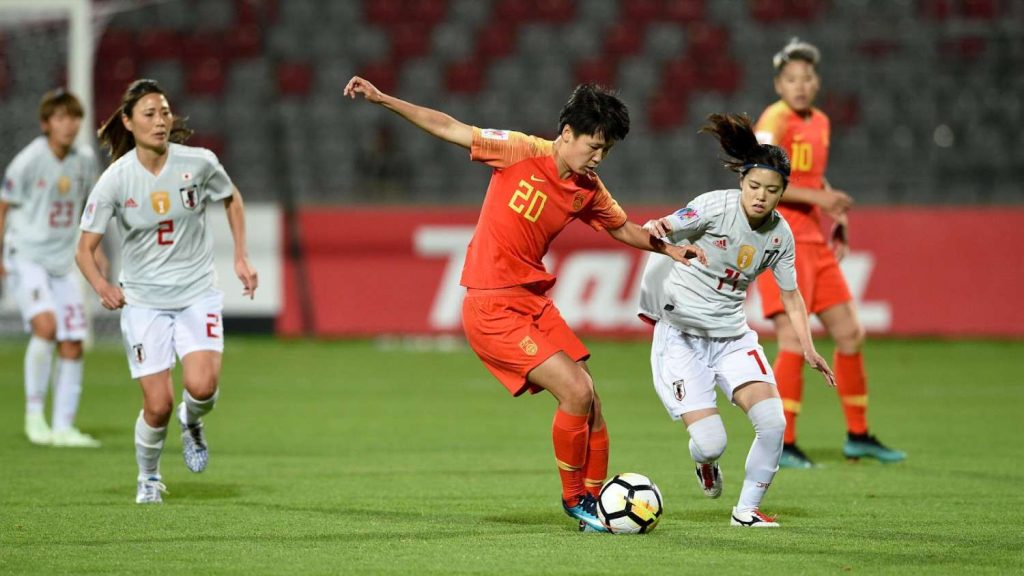
Her scoring contributions began in the group stage, where China defeated Thailand and the Philippines, then advanced to the knockout rounds. Li Ying continued to contribute offensively in the semi-finals and the third-place playoff. In the third-place match, China defeated Thailand 3–1, with Li Ying scoring the opening goal.
Her tally represented a major share of China’s total scoring output and helped secure both a podium finish and qualification for the 2019 FIFA Women’s World Cup.
3. Park Eun-sun — South Korea (6 Goals)
South Korea’s run in the 2014 AFC Women’s Asian Cup in Vietnam included a major scoring contribution from Park Eun-sun, who finished with 6 goals. Her most significant performance came in the group stage against Thailand, where she scored a hat-trick in a 4–0 victory.
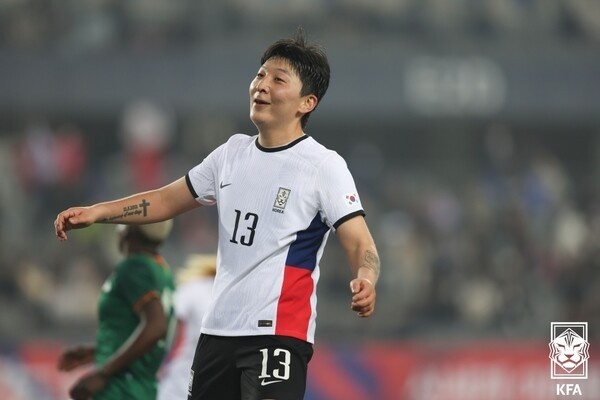
Those goals helped South Korea secure advancement from the group stage while improving their goal difference.
Park remained South Korea’s primary attacking threat throughout the tournament. Although South Korea eventually lost the third-place playoff to China 2–1, finishing fourth overall, Park Eun-sun’s total remained joint-highest among all players in the competition.
4. Yang Li — China PR (6 Goals)
China’s offensive output in the 2014 edition was significantly influenced by Yang Li, who also scored 6 goals to share the Golden Boot.
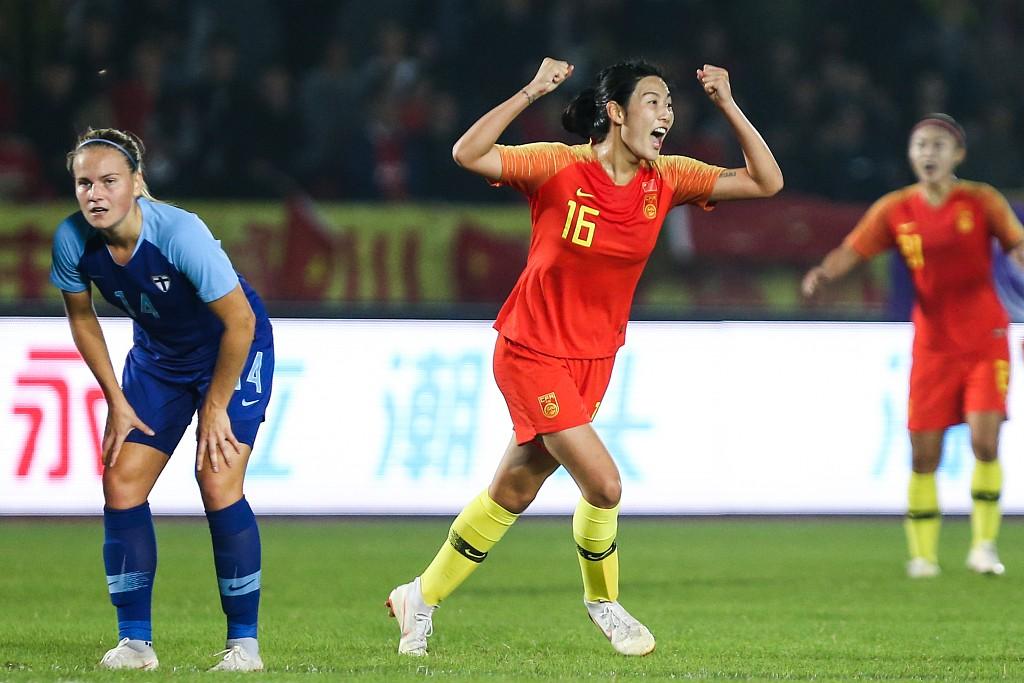
Her most dominant performance occurred during China’s 7–0 win over Thailand, where she scored four goals in a single match. That performance significantly improved China’s group position and accounted for the majority of her tournament tally.
Yang Li’s scoring contributions helped China progress into the knockout phase before securing third place after defeating South Korea 2–1 in the playoff match.
5. Kozue Ando — Japan (3 Goals)
The 2010 AFC Women’s Asian Cup in China produced the lowest Golden Boot tally among the tournaments listed, with Kozue Ando finishing top scorer with 3 goals.
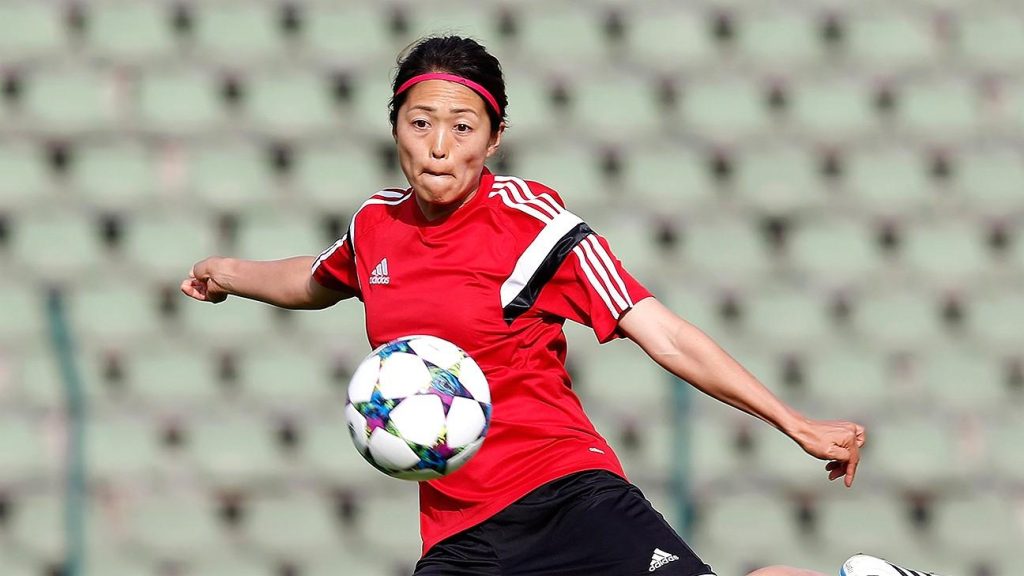
The edition featured eight teams and several tightly contested matches, resulting in lower overall scoring. In this context, Ando’s goals became statistically significant in determining the tournament’s scoring chart.
Japan concluded its campaign with a third-place finish, while the final saw Australia defeat North Korea on penalties after a 1–1 draw.
6. Ri Kum-suk — North Korea (7 Goals)
North Korea’s title-winning campaign in the 2008 AFC Women’s Asian Cup in Vietnam coincided with a strong scoring performance from Ri Kum-suk. She scored 7 goals, finishing as the tournament’s leading scorer.
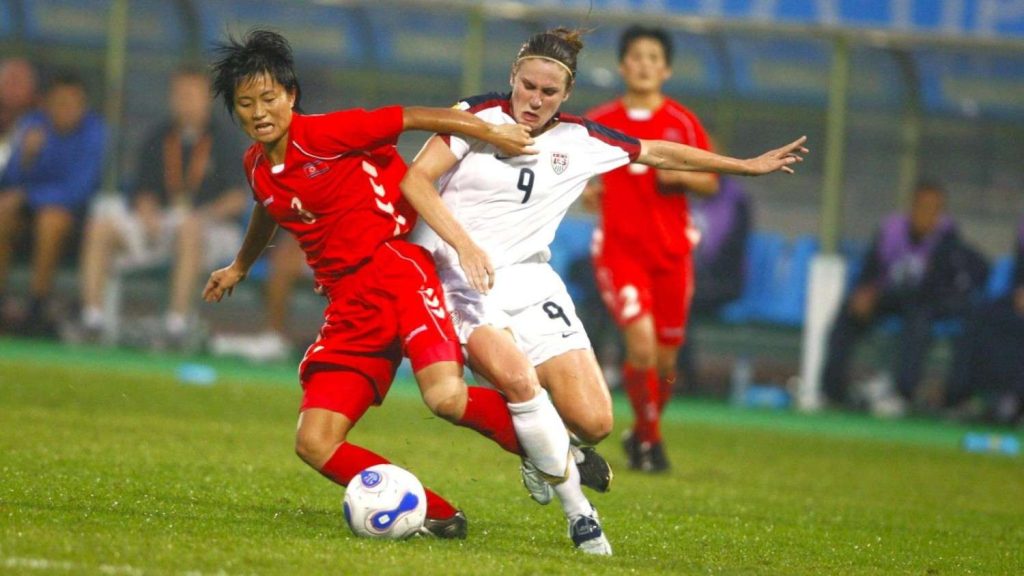
Her goals played an important role in North Korea’s success in attacking as they progressed through the tournament stages. North Korea eventually reached the final and defeated China 2–1 to secure the championship.
Ri Kum-suk’s goal tally was one of the defining attacking performances of that tournament.
7. Yuki Nagasato — Japan (7 Goals)
Japan’s attacking efforts during the 2006 AFC Women’s Asian Cup in Australia were largely led by Yuki Nagasato, who scored 7 goals to share the Golden Boot.
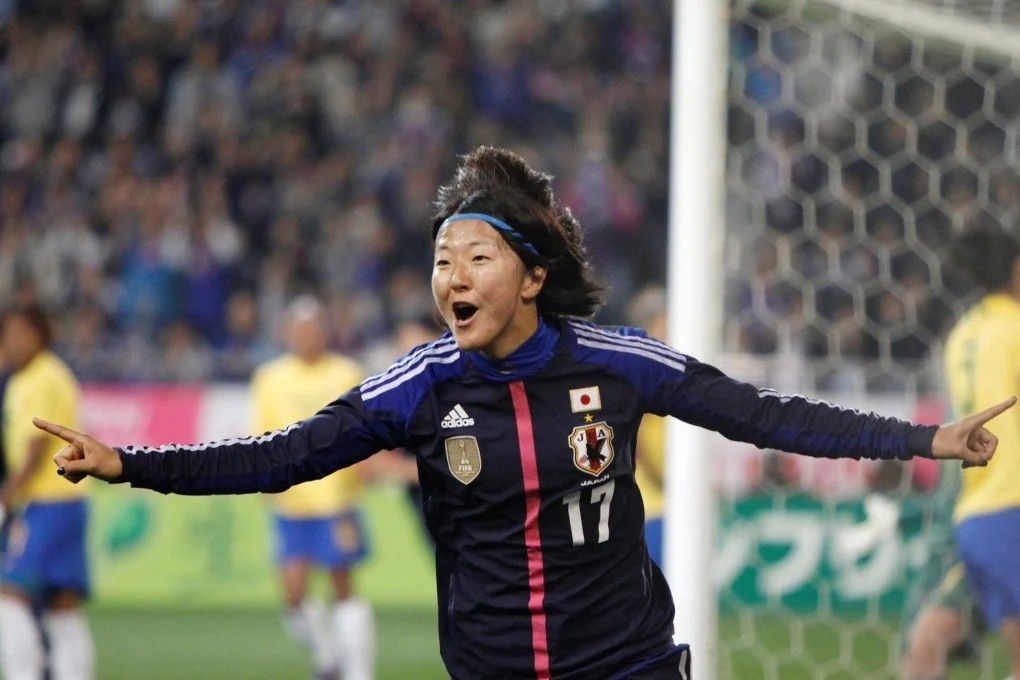
Her goals formed the core of Japan’s offensive production throughout the tournament and helped the team progress into the later stages. Japan eventually finished fourth, but Nagasato’s scoring output remained among the most productive performances in that edition.
8. Jung Jung-suk — South Korea (7 Goals)
South Korea’s Jung Jung-suk also scored 7 goals in the 2006 tournament, sharing the Golden Boot with Nagasato.
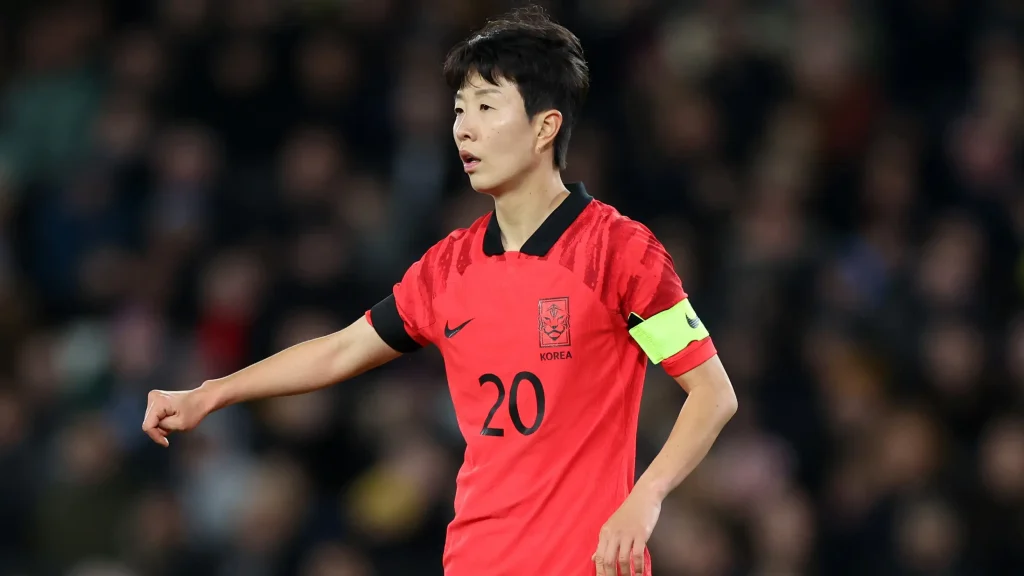
Despite her strong individual scoring record, South Korea was eliminated during the group stage. Her goal tally, therefore, represents one of the rare cases where the tournament’s top scorer came from a team that did not advance into the knockout rounds.
9. Homare Sawa — Japan (6 Goals)
The 2003 AFC Women’s Asian Cup in Thailand featured another strong scoring performance from Japan, with Homare Sawa finishing the tournament with 6 goals.
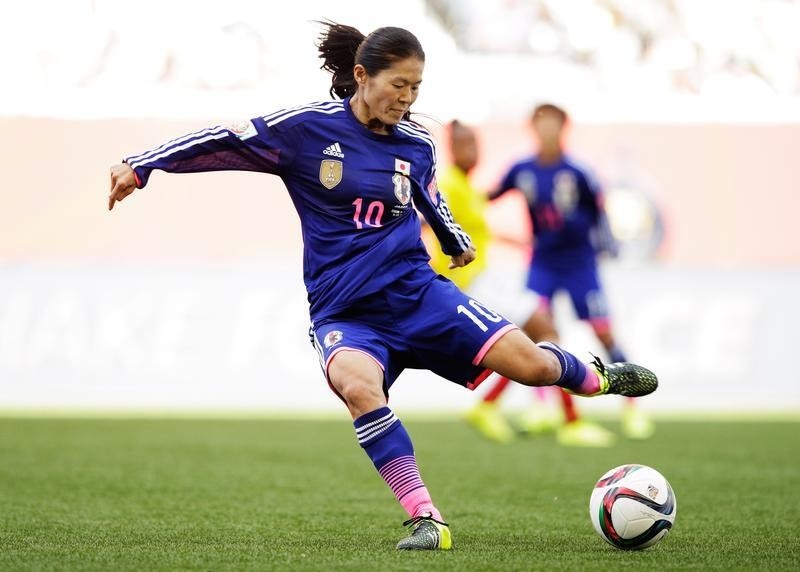
Her scoring contributions reinforced her position as one of Japan’s most influential attacking players during the early 2000s. Japan advanced into the later stages of the competition but ultimately finished fourth overall.
10. Mio Otani — Japan (16 Goals)
The 2001 AFC Women’s Asian Cup in Taiwan produced the highest individual scoring record in the tournament’s history. Mio Otani scored 16 goals, a tally that remains unmatched in any edition of the competition.
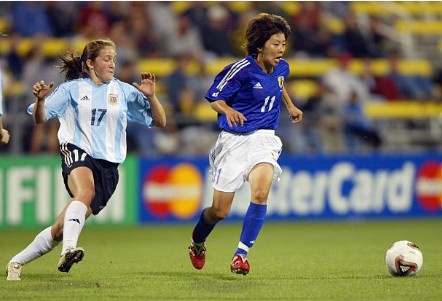
Her goals powered Japan’s progression throughout the tournament and played a decisive role in their run to the final. Japan ultimately finished as runners-up after losing the final to North Korea, but Otani’s scoring performance remains the most prolific Golden Boot campaign in AFC Women’s Asian Cup history.
AFC Women’s Asian Cup Golden Boot Summary
Across the eight tournaments between 2001 and 2022, the Golden Boot has been won by players representing five different national teams.
Japan has produced multiple top scorers, while China PR, Australia, North Korea, and South Korea have also produced Golden Boot winners.
The scoring totals have ranged from 3 goals in 2010 to 16 goals in 2001, illustrating how tournament format and match competitiveness influence goal tallies. In several cases, the Golden Boot winner’s goals directly contributed to podium finishes or championship campaigns.
More Related Topics:
FAQs
Australia’s Sam Kerr won the Golden Boot with 7 goals.
Ri Kum-suk scored 7 goals in 2008, helping North Korea win the AFC Women’s Asian Cup.
Japan, China PR, Australia, North Korea, and South Korea have produced Golden Boot winners in this period.
The lowest tally is 3 goals, recorded by Kozue Ando during the 2010 tournament hosted in China.